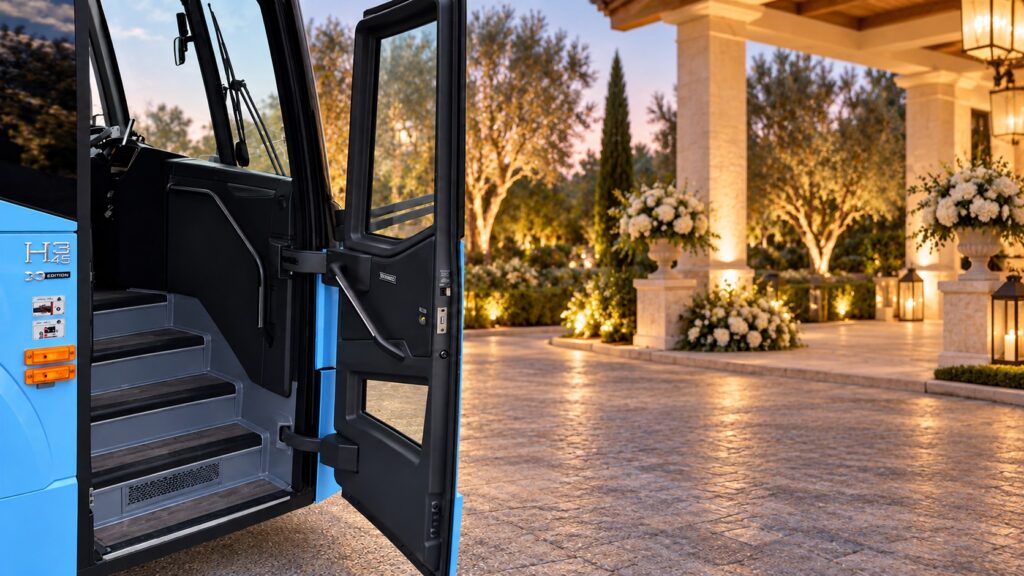
One bus can make multiple wedding shuttle trips when the complete cycle fits the arrival window and each load stays within the confirmed passenger capacity. Count boarding, driving, unloading and the empty return—not just hotel-to-venue travel. Then test the evening separately, because guests may want to leave at the same time.
For a Los Angeles wedding, this is a timing decision as much as a seat-count decision. A plan that looks economical on paper can leave the last group arriving too late or waiting much longer than expected after the reception.
Count shuttle users by direction
Ask guests whether they need the ride to the venue and the ride back. These are separate questions. Someone arriving with the wedding party may need the guest shuttle later; someone driving to the ceremony may have arranged another way home.
Include planners or accompanying staff if they will travel. For UniSky’s 33-passenger configuration, 60 confirmed riders require at least two passenger loads in that direction. That arithmetic establishes the minimum number of loads, not whether the schedule works.
Build the full cycle before promising departure times
Use an illustrative example, not a Los Angeles travel-time estimate: allow 10 minutes to board, 20 minutes to travel, five minutes to unload and 20 minutes to return empty. The coach needs 55 minutes from the start of the first boarding until it is back at the hotel. If another 10-minute boarding follows, the second departure cannot simply be listed 20 minutes after the first.
Actual allowances depend on the route, traffic, guests and approved loading points. Ask the operator to review them. A short map distance does not remove the time needed to assemble a group or approach a private venue.
Work backward from the last acceptable arrival
Start with the time the final group must be off the coach, then allow for walking, seating and any venue entry process. Place the last passenger run first in your planning sheet. Work backward to see when earlier groups would need to board.
As an example, if all guests must be off the coach by 4 p.m., an early group may need a substantially earlier hotel pickup to leave time for the return cycle. Ask the venue whether early arrivals can enter, find shade or use facilities. Do not solve a transport problem by creating an unsupported waiting period at the ceremony site.
Check the reception return as a new problem
Two arrival runs do not automatically justify two late-night return runs. Guests may arrive in staggered groups but gather at one exit when the reception ends. If the first load fills, the remaining guests need a safe, permitted waiting arrangement until the coach returns.
Consider an earlier optional departure and a final departure if the operating plan supports both. Ask guests about likely use and publish the confirmed times. Do not advertise “continuous shuttles” unless the actual cycle and service window support that description.
Publish instructions guests can follow
- Exact hotel entrance and pickup landmark, not just the property name.
- Boarding opening time and departure time as separate items.
- Which guest group or reservation applies to each departure.
- Reception pickup location and confirmed final departure.
- Planner contact for questions and instructions for missed departures.
Ask the hotel and venue to confirm motorcoach access and staging. Do not assume the coach can wait at the loading point throughout the ceremony. If the property changes its entrance instructions, update the operator and the guest message together.
When should you reconsider a one-bus plan?
Reconsider it when the first pickup becomes unreasonably early, routes overlap, riders cannot wait between returns or the final count exceeds the planned loads. A different vehicle arrangement may be needed, but additional vehicles must be confirmed rather than assumed available.
Review UniSky wedding transportation, then send the hotel, venue, riders by direction and wedding timeline. The request should ask whether repeated trips are feasible and what schedule is included. Costs and any changes are reviewed against that specific plan.