Looking to book a vehicle rather than build the schedule? See our Los Angeles production crew transportation service for coach details and a tailored service request.
A base camp-to-set shuttle service in Los Angeles connects a production’s staging area with the active filming location on a planned cycle. The route must account for passenger waves, set access, coach turning space, call times and the time required to return for the next group.
Define the base camp role
Clarify whether base camp is the main crew parking location, a holding area, a catering location or the point where passengers transfer to production vehicles. This determines who uses the shuttle and when.
Map the exact set entrance
Provide the approved passenger drop-off rather than only the filming address. Confirm gates, security, road restrictions and whether a 45-foot coach can approach the location.
List movement groups
Separate crew, background performers, support staff and visitors. Different groups may load at different locations or report at different times.
Build the route cycle
A complete cycle includes positioning, loading at base camp, travel, set entry, unloading and return. The cycle time determines how frequently one coach can serve the route.
Do not publish a short interval based only on map driving time.
Work backward from production deadlines
Passengers may need time for credential checks, wardrobe, hair and makeup, safety meetings or department preparation after reaching the location. Set the shuttle arrival target accordingly.
Plan capacity by wave
Use expected riders on each departure. A large production may have a manageable coach requirement when departments report in separate waves; a single concentrated call may require more capacity.
Evaluate the 33-passenger coach
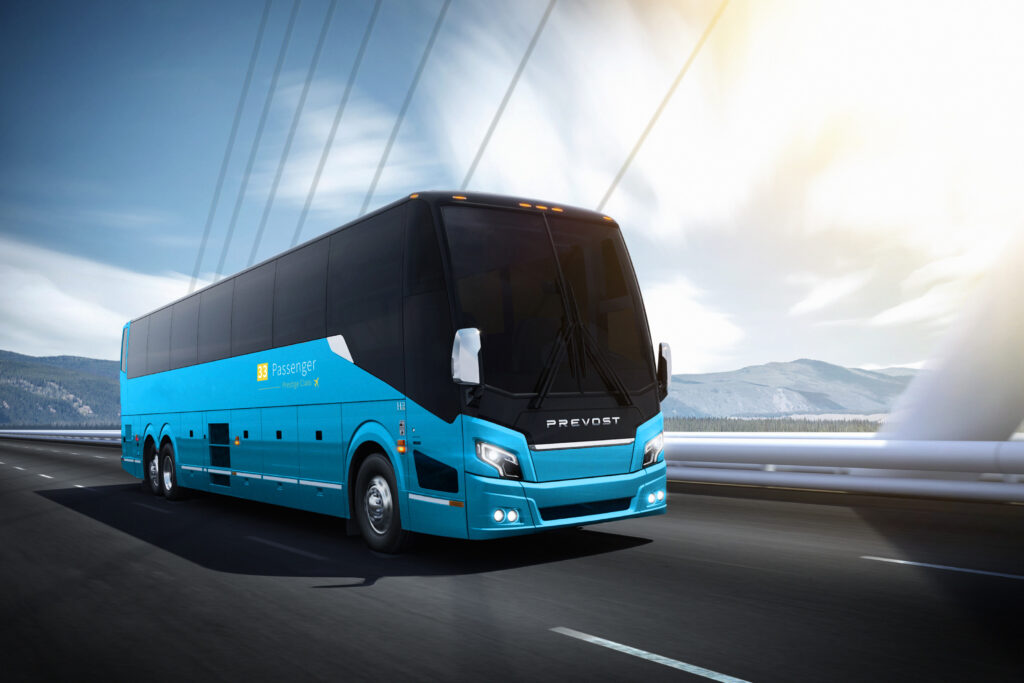
UniSky Express operates a 33-passenger Prevost with reclining leather seats, Wi-Fi, USB power, a restroom and luggage storage. It may fit a base camp route when passenger demand and road access support this coach.
Equipment volume and items not suitable for passenger storage must be discussed before service.
Choose scheduled or continuous service
Scheduled departures work for defined call waves. Continuous circulation may support ongoing background or crew movements, but the route cycle must allow useful frequency.
Plan meal breaks, company moves and wrap
Demand can change during meals, a location move or department release. Include these movements rather than treating the morning call as the complete transportation day.
Prepare base camp loading instructions
- exact coach staging location;
- passenger queue and check-in owner;
- boarding window;
- department or passenger group;
- departure authority;
- set contact and gate instructions;
- return or release process.
Control changes
Identify the person who can add a wave, delay a departure or change the set entrance. The provider must confirm feasibility before an updated schedule is distributed.
Connect the route to the full transportation plan
Base camp service may be one part of a larger program that includes hotels, crew parking and late returns. See our Los Angeles production crew transportation guide for the broader planning framework.
Base camp shuttle FAQ
Can one coach circulate continuously?
Possibly, if the complete route cycle, access and passenger demand support useful repeat service.
Can the coach enter every filming location?
No. Access, turns, road conditions and property approval must be checked for each location.
Can equipment travel with passengers?
Some luggage or equipment may fit storage, but item type and volume must be reviewed before confirmation.
Can the route change during the day?
Only through the production’s authorized contact and after the provider confirms the change.
Request a base camp-to-set shuttle review
Share the base camp, filming location, passenger waves, call times and access instructions with UniSky Express.
Discuss base camp shuttle service.
Continue planning your production shuttles
Production crew transportation service covers booking and vehicle fit. Use the overall cast and crew planning guide, base camp route planning guide and call and wrap scheduling guide for the relevant planning step.
Pingback: Cast & Crew Transportation Planning | UniSky Express