Looking to book a vehicle rather than build the schedule? See our Los Angeles production crew transportation service for coach details and a tailored service request.
A film crew shuttle service in Los Angeles must be scheduled around when departments need to be ready—not only the published call time—and around a realistic release process after wrap. Early calls, split calls, company moves and uncertain wrap times require clear transportation authority and communication.
Separate call time from shuttle arrival
Work backward from department readiness. Include loading, travel, security, check-in, walking and preparation after arrival. Crew should not reach the curb at the exact time they are expected on set.
Group passengers by report requirement
Departments, office staff and background performers may have different calls. Create movement groups instead of one broad “crew” departure.
Confirm the pickup environment
Hotels, crew parking and base camp each have different loading constraints. Provide the exact entrance, staging permission, early-morning contact and rider queue plan.
Build a morning departure sheet
- coach report time;
- passenger boarding time;
- firm departure time;
- passenger group or department;
- location arrival target;
- on-site contact and gate;
- late-passenger rule.
Plan split calls and added waves
When crews report in stages, calculate whether one coach can return for another group. The complete route cycle must fit between departures.
Schedule company moves
A move between filming locations needs a new passenger count, loading point, route and destination contact. It should not be treated as an informal stop added to the morning trip.
Manage uncertain wrap times
Define who releases the coach, how much notice the provider receives and whether the vehicle is scheduled to remain, return later or perform another movement. Do not promise riders an exact departure until production authorizes release.
Use return windows carefully
A return window communicates uncertainty but still needs operating boundaries. Identify the earliest expected release, the decision contact and the final destination.
Match vehicle capacity to each call
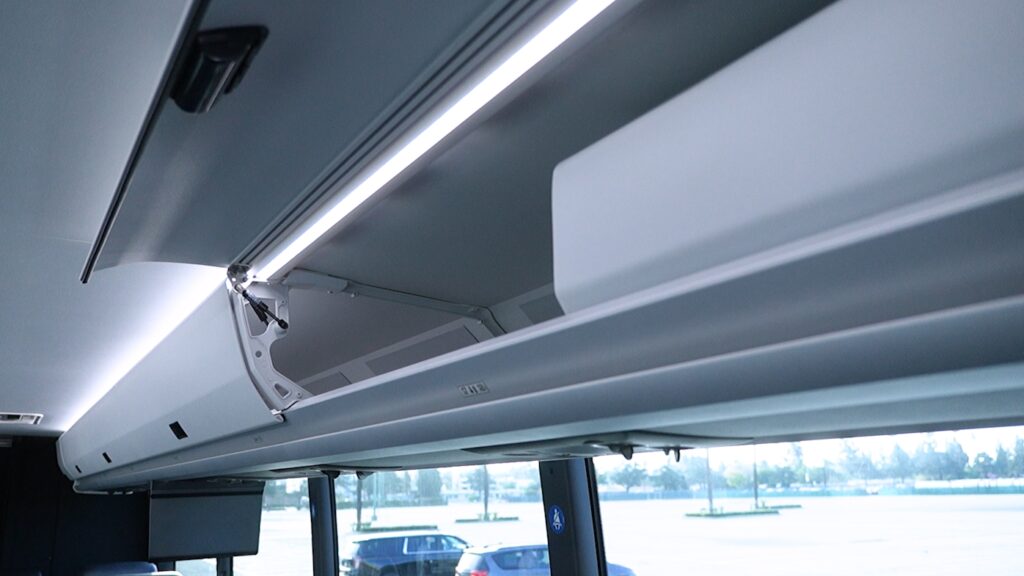
UniSky Express operates a 33-passenger Prevost coach. It may fit a department group, hotel route or crew wave when riders, storage and location access match the vehicle.
Handle late-night returns
Confirm hotel or parking access after normal hours, lighting, passenger headcount and the authorized release contact. Publish the destination and any approved stops before departure.
Keep one current transportation schedule
Call sheets may change, but the provider needs a controlled transportation schedule. Record confirmed revisions and distribute rider instructions from the current version.
Measure recurring production service
For multi-day shoots, review boarding counts, on-location arrival, access delays and wrap-release communication. Use the information to improve later days.
Call and wrap transportation FAQ
How early should a crew shuttle arrive?
Work backward from department-ready time and include all loading, travel and on-site preparation.
What happens when wrap is delayed?
The authorized production contact should update the provider, which must confirm the revised operating plan.
Can one coach serve several call times?
Yes, if complete route cycles and passenger demand fit the schedule.
Does UniSky guarantee on-demand service after wrap?
No. The release and return process must be included in the confirmed service plan.
Request film crew shuttle service in Los Angeles
Send UniSky Express the pickup, filming location, call groups, expected riders and wrap assumptions.
Request a call and wrap shuttle review.
Continue planning your production shuttles
Production crew transportation service covers booking and vehicle fit. Use the overall cast and crew planning guide, base camp route planning guide and call and wrap scheduling guide for the relevant planning step.